
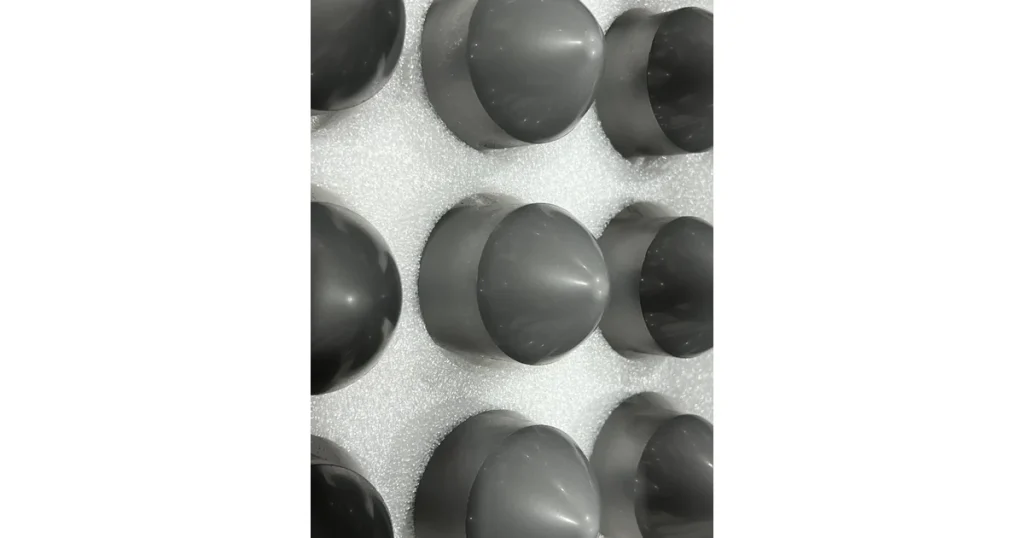
Tungsten carbide road milling inserts should not be selected from hardness alone. On a cold planer, every pick works inside a system: asphalt abrasiveness, aggregate size, cutting depth, drum speed, water flow, holder condition, pick rotation, carbide grade, and brazed geometry all affect the result. A grade that resists abrasion in one pavement can chip in a high-impact recycled layer. A tougher grade can survive impact but wear too quickly when the cutting load is stable and abrasive.
For a procurement team, the practical objective is not to buy the hardest insert or the lowest-priced pick. It is to specify a repeatable combination of wear resistance, toughness, dimensional fit, and batch consistency that keeps the milling drum productive. This guide explains how to translate field observations into a purchase specification, compare available grades, plan a controlled trial, and evaluate suppliers with evidence rather than catalog language.

Start with the failure mode on the milling drum
The used pick is your best starting document. Collect inserts from several positions across the drum instead of inspecting only the most damaged piece. Edge positions, center positions, and high-load cutting zones may experience different cooling, impact, and rotation behavior. Record the machine model, drum type, cutting width, milling depth, travel speed, pavement structure, aggregate type, water setting, working hours, and reason for removal.
Separate the observations into four failure patterns.
Uniform abrasive wear
Uniform wear produces a progressive loss of carbide volume without major fractures. The tip becomes shorter or develops a smooth wear flat while the steel body and braze remain intact. This pattern usually points toward an abrasion-dominated application. A harder, finer-grained grade can be evaluated, but only after confirming that the pick rotates freely and that the water system is working. A seized pick can create one-sided wear that looks like a material problem.
Chipping or gross fracture
Chipping removes pieces from the carbide tip. Gross fracture may split the insert or detach a large section after an impact. In this condition, choosing a still harder grade can make the problem worse because hardness and impact tolerance must be balanced. Review reclaimed pavement, embedded steel, large aggregate, cutting depth, and drum vibration before changing the material. If impact is the dominant load, a tougher grade and a geometry with better support are more relevant than a higher HRA value.
Thermal damage or braze-related separation
Discoloration, braze-line cracking, carbide movement, or complete tip loss requires a different investigation. These symptoms can be connected to overheating, insufficient water, unsuitable brazing practice, holder wear, or an interface design that concentrates stress. Changing carbide grade without checking the joint can hide the real cause. Ask the supplier for the braze specification, joint inspection method, and pull-off or destructive-test practice used for the pick design.
Uneven wear across one batch
When picks installed together wear at visibly different rates, the problem may involve position, rotation, installation, or material variation. Map each removed pick to its drum position and compare like-for-like locations. If the pattern follows positions, investigate the machine. If it appears randomly across comparable positions, review batch records and measured carbide properties. Road milling productivity is often limited by the earliest failed picks, so dispersion matters almost as much as the average result.
Match grade properties to abrasion and impact
Grade selection is a trade-off. Tungsten carbide provides the hard phase, while the binder and microstructure support toughness and hold the carbide grains together. Buyers do not need the supplier’s proprietary recipe, but they do need controlled output properties that connect the grade to the intended service condition.
Ruixin’s current mining and wear reference grades illustrate the decision:
| Grade | Density (g/cm³) | Hardness (HRA) | Flexural strength (MPa) | Grain size (µm) | Selection direction |
|---|---|---|---|---|---|
| SR7X | 14.70 ± 0.05 | 91.0 ± 0.5 | ≥ 2,000 | 1.0–1.2 | High wear resistance where impact is limited |
| SR8C | 14.65 ± 0.05 | 89.0 ± 0.5 | ≥ 2,200 | 2.0–3.0 | Balanced wear and toughness for road milling and variable cutting |
| SR10C | 14.45 ± 0.05 | 88.0 ± 0.5 | ≥ 2,200 | 2.0–3.0 | Higher-toughness direction for impact-dominated service |
These values are a comparison framework, not a universal ranking. SR7X is harder than SR8C and SR10C, but that does not automatically make it the best road milling grade. SR8C is the documented balanced road-milling option. SR10C moves the decision toward toughness. The correct choice depends on whether the current pick is being consumed by gradual abrasion or removed early by fracture.
Use a simple decision sequence:
- If the dominant loss is smooth abrasion and fractures are rare, evaluate the wear-resistant direction.
- If edge chipping or impact fracture removes usable carbide, evaluate the tougher direction.
- If failure changes by pavement layer, begin with a balanced grade and define the layers separately in the trial record.
- If carbide survives but the joint fails, keep the grade decision open and audit the braze and geometry first.
- If wear varies randomly within one shipment, prioritize batch consistency and traceability before changing the nominal grade.
The same logic applies when comparing road milling carbide inserts with components for other impact-and-wear systems. The material property that improves one failure mode can reduce resistance to another. A reliable specification therefore states the application and the accepted property range rather than naming hardness alone.
Include geometry, fit, and rotation in the specification
A carbide grade cannot compensate for a poor mechanical interface. The insert must fit the steel body, the brazed area must support the cutting load, and the complete pick must fit and rotate in the holder. When requesting a quotation, provide a controlled drawing or a dimensioned sample with revision status.
At minimum, define:
- carbide head diameter, height, included angles, radii, and support surfaces;
- mating dimensions between carbide and steel body;
- braze gap or interface requirements where the buyer controls them;
- complete-pick shank dimensions and retention system;
- holder compatibility and the intended cold planer or milling-machine family;
- dimensional tolerances and the measuring method;
- edge condition, visible-defect limits, and packaging protection;
- part marking, lot identification, and drawing revision.
Confirm whether the insert is supplied as carbide only or as a finished brazed pick. The inspection plan differs. For carbide-only parts, the buyer must control the downstream braze process. For complete picks, the supplier should control both material properties and joint integrity.
Rotation is especially important. A freely rotating pick distributes wear around the tip and helps maintain a more stable cutting profile. A seized pick creates localized heating and one-sided wear. Before attributing a short service life to carbide composition, inspect holder clearance, contamination, retainer condition, installation, and water delivery. The trial report should record these variables so that grade comparisons are not distorted by mechanical problems.
Treat batch consistency as a measurable performance requirement
A sample can pass while production shipments still disappoint. That happens when the approved grade name remains unchanged but raw material, powder preparation, pressing, sintering, inspection, or lot segregation drifts. Road milling makes this risk visible because dozens or hundreds of picks operate on one drum. A small population of weak picks can trigger unscheduled replacement and reduce the usable life of the rest.
Require a material test report for each production lot. The report should identify the customer part number, supplier batch number, manufacturing date or traceable run, sample quantity, test methods, results, acceptance limits, and approval. For the grades in the table above, density, HRA hardness, and flexural strength are appropriate starting controls. Depending on the part and risk, the control plan can also include dimensions, microstructure, porosity, magnetic properties, braze inspection, or destructive joint tests.
Do not evaluate consistency only by whether every result is technically inside a wide catalog range. Track variation over time. For a measured property such as density or hardness, calculate:
Coefficient of variation (%) = standard deviation ÷ mean × 100
The buyer and supplier should agree on sampling frequency and response limits rather than copying a generic percentage. The useful question is whether results remain stable from the approved sample through repeat shipments. A control chart showing each batch is more informative than isolated certificates filed separately.
Field performance needs the same discipline. For each trial group, calculate:
Pick consumption rate = number of picks replaced ÷ milled area
or, when operations are recorded by volume:
Pick consumption rate = number of picks replaced ÷ milled volume
Then compare operating cost:
Carbide pick cost per m² = total pick cost for the run ÷ accepted milled area
A more complete total-cost comparison can add downtime:
Total milling tool cost = pick cost + replacement labor + downtime cost + holder damage cost
Do not insert assumed labor or downtime values. Use the contractor’s actual records. The formula is useful because it prevents a low purchase price from hiding frequent replacement or early drum service.
Design a controlled field trial
A supplier comparison is only meaningful when the operating conditions are comparable. Randomly installing a few new picks during routine work may produce anecdotal feedback, but it does not establish whether the grade, geometry, or batch is better.
Create a written trial plan before installation:
- Define the decision to be made: grade change, supplier approval, geometry change, or batch verification.
- Select a pavement section with documented layer structure and aggregate condition.
- Record the machine, drum, holder condition, pick positions, water setting, cutting depth, speed, and operator.
- Use clearly identified control and candidate groups.
- Map each pick to a position or matched drum zone.
- Establish removal criteria for wear, fracture, braze failure, or planned inspection.
- Record milled area or volume, working time, replacements, and downtime.
- Photograph representative picks before and after the run.
- Keep removed samples by group and batch for failure review.
- Review the result jointly with operations, maintenance, purchasing, and the supplier’s engineer.
If project conditions prevent a side-by-side trial, run sequential sections with the same documentation and note every changed variable. Avoid presenting the result as a controlled comparison if pavement or operating conditions differed materially.
The first trial should test the smallest number of variables possible. If you change grade, carbide geometry, steel body, holder, and operating settings at once, a good result cannot be attributed to one cause. Start with the variable most strongly connected to the observed failure mode. After the material direction is confirmed, optimize geometry or commercial terms in a second step.

Build acceptance criteria into the RFQ
An RFQ for tungsten carbide road milling inserts should convert the trial and failure analysis into auditable requirements. A buyer who sends only a photograph and quantity forces the supplier to fill the gaps with assumptions. Those assumptions later become disputes.
Include the following sections:
Application data
State the cold planer or recycler model, drum and holder information, pavement layers, aggregate or recycled content where known, normal cutting depth, speed range, water conditions, typical failure mode, and the current pick’s service record.
Product definition
Attach the drawing, revision, material or approved-grade direction, dimensions, tolerances, carbide-only or complete-pick supply scope, marking, packing, and yearly or batch volume.
Material properties
List the agreed density, hardness, strength, grain-size direction, and any microstructure or porosity limits. If the supplier recommends a custom grade, require a technical data sheet and a clear cross-reference between the supplier’s internal grade and the customer part number.
Inspection and documentation
Define the sample plan, measurement methods, first-article report, batch material test report, dimensional report, certificate requirements, nonconformance process, and record-retention period.
Change control
Require written approval before changing the carbide grade, powder source where contractually controlled, manufacturing route, critical tooling, sintering route, braze process, subcontractor, or drawing interpretation. The supplier should identify affected inventory and shipments when a change occurs.
Trial and release
State that sample approval does not automatically release unlimited production. Define the pilot quantity, field-trial criteria, initial production lot, and conditions for repeat supply.
For custom programs, a factory that can discuss grade formulation and manufacturing controls is more useful than a reseller limited to catalog substitutions. Ruixin accepts OEM drawings and application details, supports custom grade formulation, and can provide ISO certification, material test reports, and batch QC reports for shipment. Procurement teams comparing complete tool systems can also review the manufacturing approach used for carbide cutter bits for rotary drilling and other engineered wear components.
Audit the supplier behind the sample
The supplier evaluation should confirm that the production process can reproduce the approved trial. Ask for evidence that links incoming powder, mixed batch, pressing, sintering, finishing, inspection, and shipment to one traceable lot.
During an on-site or remote audit, verify:
- legal and production-site identity;
- current quality certification and covered address;
- raw-material receiving and lot identification;
- controlled grade formulation and revision approval;
- pressing and tooling controls;
- sintering cycle selection and retained run records;
- segregation of accepted, pending, and rejected product;
- calibration of hardness, density, dimensional, and strength-testing equipment;
- batch release authority and nonconformance handling;
- finished-product labeling and certificate traceability.
Ask the supplier to retrieve one completed batch record rather than showing blank forms. A strong record connects the customer part number and drawing revision to actual results. A weak system depends on verbal explanations and cannot show which material lot entered a shipment.
Capacity claims should also be checked against the planned order. Ruixin’s documented facility is 14,200 m² with annual cemented-carbide capacity up to 500 tons. Those figures establish scale, but the buyer should still verify equipment loading, tooling availability, inspection capacity, and the realistic lead time for the exact part. Capacity without process control does not guarantee consistent road planer carbide tips.
Diagnose poor pick life before changing suppliers
When service life falls, use a structured review:
| Observation | First checks | Material direction to evaluate |
|---|---|---|
| Smooth, rapid wear on most picks | Pavement abrasiveness, cutting depth, rotation, water | Higher wear resistance after machine checks |
| Edge chipping or fractured tips | Impact, embedded debris, aggregate size, vibration, support geometry | Greater toughness or better-supported geometry |
| Random early failures in one shipment | Drum position map, batch records, property dispersion | Batch investigation before grade change |
| Tip loss at the joint | Braze line, heat, interface, holder condition | Correct joint process; grade may not be root cause |
| One-sided wear | Pick rotation, holder wear, contamination | Mechanical correction before material change |
| Higher consumption after pavement change | Layer structure, recycled content, aggregate, operating settings | Re-run grade selection for the new condition |
Do not accept “the grade is the same” as a complete root-cause statement. The review should compare the actual batch properties, dimensions, microstructure where relevant, joint condition, and operating record. Keep failed samples until the corrective action is verified.
If the cause remains uncertain, send representative used and unused parts, the drawing, batch certificate, drum-position map, and operating data to the manufacturer. That evidence gives the engineer a basis to recommend SR7X, SR8C, SR10C, a custom grade, a geometry adjustment, or a process correction without guessing.
Frequently asked questions
Why does carbide pick wear vary between asphalt passes on the same milling drum?
Variation can come from pavement layers, aggregate, cutting depth, cooling, holder wear, pick rotation, drum position, or batch dispersion. Map removed picks to their positions and compare material reports before assigning the cause. If the pattern follows a drum zone, investigate the machine and operating condition. If it appears randomly across comparable positions, review batch consistency.
What carbide grade should I use for cold milling in abrasive recycled asphalt?
There is no defensible grade answer without the impact and failure record. For stable abrasive wear with limited chipping, evaluate the wear-resistant direction. For recycled material that creates impact and fracture, a balanced or tougher grade may be more suitable. SR8C is Ruixin’s documented balanced road-milling grade, while SR7X and SR10C represent harder and tougher directions respectively. Confirm the choice through a controlled field trial.
How can I improve carbide pick service life on a road milling machine?
Start by classifying failures. Check rotation, holders, water, cutting depth, speed, drum vibration, pavement condition, carbide grade, geometry, and braze integrity. Change the variable connected to the dominant failure mode, then measure consumption per milled area or volume. Replacing a grade without correcting a seized holder or joint problem will not produce a reliable improvement.
Which documents should accompany a production shipment?
The purchase specification should define the exact package. A practical baseline is a batch material test report, dimensional inspection results, lot identification, certificate documents required by contract, and a record of approved deviations. The report should reference the customer part number, drawing revision, and production lot.
Turn the field problem into a controlled specification
Selecting tungsten carbide road milling inserts is an engineering and procurement exercise, not a hardness contest. Begin with used-pick evidence, classify abrasion and impact, verify geometry and rotation, compare grades within documented property ranges, and measure both average consumption and batch dispersion. Then carry the approved conditions into the RFQ, trial plan, inspection report, and change-control agreement.
Ruixin Tungsten Carbide manufactures road milling inserts and custom cemented-carbide components with grade-selection support. Send your milling-machine model, current pick drawing, pavement conditions, failure photographs, current grade data, and expected volume. The engineering team can review the failure mode, recommend a grade and dimensional direction, and confirm the quotation within 24 hours after receiving complete specifications.
Get a Custom Grade Recommendation or contact info@ruixintungstencarbide.com / WhatsApp +86-15253178777. For related engineered applications, see Ruixin’s shield machine carbide tips.
 English
  Russian
  Spanish
  French