
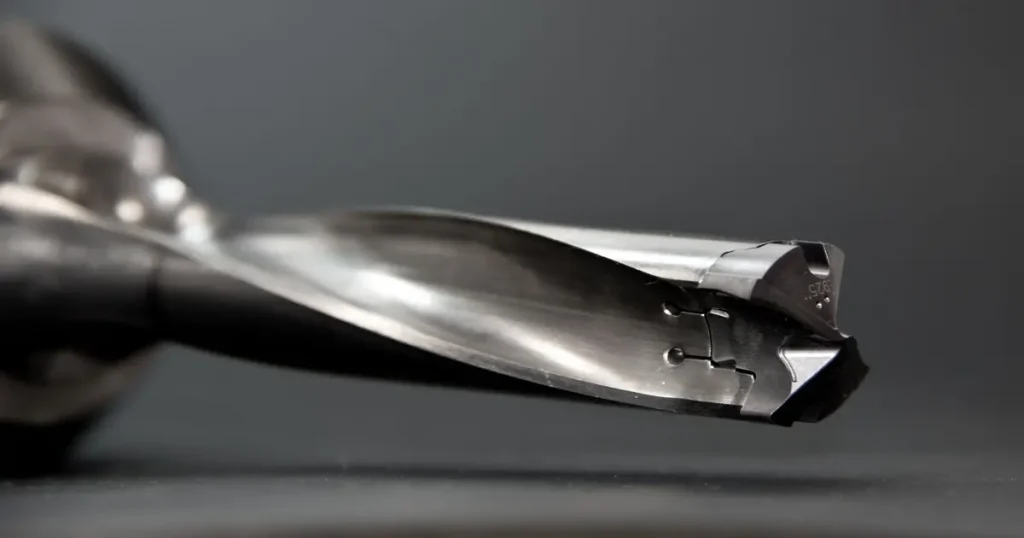
A Road Milling Contractor’s Sample Was Fine. The Bulk Order Cost Them 18 Days of Downtime.
The contractor ordered 800 picks for a Wirtgen W210i cold planer. The pre-production sample passed visual inspection — same dimensions, same steel body finish, same shiny carbide tip. But by the third day on a 4-inch asphalt mill-overlay project, picks on the drum’s right side were losing their carbide tips at 2.4 times the rate of the left side. The root cause: batch-to-batch consistency in the carbide grade itself. The sample had been hand-picked from a premium production lot. The bulk shipment came from a separate sintering run with a different raw material batch.
For a quotation-ready application review, use the road milling carbide picks.
This is the hidden cost of skipping a structured carbide pick sample evaluation procedure. A proper sample protocol doesn’t just check whether the pick fits the holder — it verifies that what you approve in the sample is what arrives in every box of the bulk order. The difference is measurable: contractors who follow a repeatable 7-step procedure reduce their risk of mid-project grade mismatch by an estimated 70-80% compared to those who rely on a visual check alone. Ruixin sees this pattern repeat across road milling procurement cycles every year — which is why our ISO 9001-certified, 14,200㎡ facility ships batch-specific MTRs on every production lot.
Batch consistency drives this entire process — and it can only be verified through destructive and semi-destructive testing on the sample set, not through catalog specs or surface inspection.

Why Skipping Sample Evaluation Costs More Than You Think
A milling drum with 150-200 pick holders multiplies any defect. If one pick in ten has a 0.1 mm oversize shank, that pick won’t seat properly in its holder. It either spins loose within 15 minutes of milling or transmits uneven load to adjacent picks, accelerating their wear pattern. The result: replacement frequency doubles across the entire drum, not just the defective position.
The quantified impact of an unverified sample approval follows a predictable chain:
- Dimensional mismatch: Shank tolerance drift of just 0.15 mm causes 30-50% of picks to fail the retention check during installation. Replacement picks must be sourced mid-project.
- Hardness variation: A 1.5-point HRA swing across a batch means some picks wear 40% faster than others on the same drum face. The drum’s effective service life is set by the fastest-wearing pick.
- Brazing defects: Micro-voids in the braze joint, invisible to the naked eye, cause carbide tip separation under thermal load at drum surface temperatures above 400°C. A single lost tip damages the steel holder body.
- Microstructure inconsistency: Cobalt pooling or abnormal grain growth in 5% of a batch produces localized brittleness. These picks fracture on the first impact with a concrete patch or aggregate inclusion.
The failure isn’t random — it’s the predictable result of unverified supplier quality control. A road milling carbide pick sample evaluation procedure is the only way to catch these issues before they become production stoppages.
The Technical Variables That Define a Road Milling Carbide Pick
You’re evaluating a sample against three interdependent variables that govern pick performance in road milling. For the full interaction model between these variables, see our cemented carbide grade selection guide.
Hardness (HRA)
Hardness directly determines abrasion resistance. In clean asphalt milling, an HRA difference of 1.0 can shift service life by 20-30%. But hardness comes at a cost: higher HRA means lower toughness. Ruixin SR7X at HRA 91.0 ± 0.5 delivers maximum abrasion resistance for low-impact milling. Ruixin SR8C at HRA 89.0 ± 0.5 trades 2 points of hardness for higher impact tolerance — its flexural strength exceeds 2,200 MPa.
Cobalt Content (%)
Cobalt binder content is the single largest lever for toughness. Increasing cobalt from 6% to 10% drops HRA by roughly 3 points but raises flexural strength from ~2,000 MPa to ~2,200 MPa. The rule is straightforward: if your primary failure mode is wear, reduce cobalt; if it’s fracture, increase cobalt. There is no universal “best” percentage — only the right match for your milling conditions.
Grain Size (µm)
Grain size controls how the carbide structure responds to repeated impact. At 1.0-1.2 µm (SR7X), the structure is dense and wear-resistant but more rigid. At 2.0-3.0 µm (SR8C, SR10C), toughness improves because the larger WC grains can deflect crack propagation. This is why the same cobalt percentage with different grain sizes performs differently in the same application.
For road milling, the limiting constraint is usually impact frequency from aggregate and concrete inclusions — which means grades optimized purely for abrasion resistance will underperform here regardless of their catalog HRA number.

The 7-Step Road Milling Carbide Pick Sample Evaluation Procedure
Each step in this protocol answers a specific question about the sample. Skip any step, and you introduce a blind spot that the bulk order will expose.
Step 1: Dimensional Verification Against Holder Specs
What to check: Shank diameter, shank length, tip height, tip width, and retention groove (if applicable). Measure at least 10 samples from the sample lot — not one.
Acceptance criteria: All dimensions must fall within ±0.05 mm of the drawing tolerance. Reject any sample with shank diameter variation exceeding 0.08 mm across the sample set. A single-sample dimensional check is insufficient: production tooling wear produces a drift pattern that only appears when you measure multiple pieces.
Why it matters: A road milling drum at full rotation generates radial forces that loosen an undersized pick within minutes. An oversized pick won’t insert fully, leaving the carbide tip at the wrong cutting angle.
Step 2: Batch Material Test Report Verification
What to check: Request the supplier’s Material Test Report (MTR) for the sample lot — not a generic spec sheet. The MTR must show three measured values: density (g/cm³), hardness (HRA), and flexural strength (MPa).
Acceptance criteria: Density must match the grade spec within ±0.05 g/cm³. HRA must fall within ±0.5 of the nominal grade value. Flexural strength must meet or exceed the minimum. For Ruixin SR8C road milling carbide picks, the MTR should show 14.65 ± 0.05 g/cm³ density, HRA 89.0 ± 0.5, and flexural strength ≥ 2,200 MPa.
Why it matters: If the supplier cannot or will not provide an MTR with batch-specific measured values, there is no way to verify that the sample grade matches what you ordered. This is a non-negotiable procurement requirement.
Step 3: Surface Hardness Cross-Section Test
What to check: Take 3-5 samples from the sample lot and cut them cross-sectionally at the carbide tip. Measure HRA at three locations: surface, mid-radius, and core of the carbide tip.
Acceptance criteria: The HRA gradient from surface to core must not exceed 0.8 HRA. A gradient exceeding this threshold indicates uneven sintering or cobalt gradient — the surface is harder but the core is under-sintered and brittle.
Why it matters: Surface-only HRA readings can pass inspection while the core of the carbide is 1.5-2.0 HRA softer. Under impact load, the softer core causes internal crack initiation that propagates to the surface. Ruixin’s internal QC protocol runs this exact 3-point cross-section test per production lot — a procedure that catches cobalt gradient issues invisible to standard surface hardness testing.
Step 4: Microstructure Inspection (Porosity and Grain Uniformity)
What to check: Polished and etched cross-section under 100x-200x optical microscope. Examine for A-type porosity (pores < 10 µm), B-type porosity (pores 10-25 µm), and cobalt distribution uniformity.
Acceptance criteria: A-type porosity ≤ 0.2% area fraction. B-type porosity zero. No visible cobalt pooling (areas where cobalt binder has segregated from WC grains). Grain size should be uniform within ±0.5 µm of the nominal range.
Why it matters: Cobalt pooling creates soft zones where fracture initiates. Abnormal grain growth (WC grains > 5 µm in a 2-3 µm nominal grade) creates stress concentration points. Both defects are invisible in an as-ground sample and only appear under metallographic preparation.
Step 5: Brazing Quality Assessment
What to check: Brazing joint inspection — both visually and by non-destructive methods. Look for braze alloy flow marks, voids at the carbide-steel interface, and braze joint thickness consistency.
Acceptance criteria: Braze joint thickness 0.05-0.15 mm maximum. No visible voids larger than 0.2 mm. Braze alloy must wet at least 90% of the carbide-steel interface area. Reject any sample with incomplete braze fill, uneven joint thickness, or oxide discoloration around the joint perimeter.
Why it matters: In road milling, the carbide tip reaches 350-450°C at the cutting interface. Thermal cycling loosens a poor braze joint within 30-45 minutes of operation. A lost carbide tip damages not just itself but the steel holder body — replacement cost multiplies by 3-5x including holder repair or replacement.
Step 6: Controlled Field Trial with Statistical Design
What to check: Install sample picks in specific, documented positions on the milling drum. Record positions by row and circumferential location. Run for at least 8 hours of continuous milling under consistent material conditions.
Acceptance criteria: After trial, measure wear flat length on each pick. Acceptable variation across the drum: coefficient of variation (CV) ≤ 15%. If CV exceeds 15%, the batch has inconsistent microstructure or grade distribution — reject for bulk order.
Why it matters: A milling drum with 168 picks (common on a W210i) averages wear across the face. If 10% of picks wear 40% faster, the entire drum must be changed out when those picks fail — not when the majority is consumed. The statistical design catches this dispersion pattern. A single-sample field test cannot.
Step 7: Documentation and Pass/Fail Threshold
What to document: Every measurement from steps 1-6 in a structured evaluation report. Compare against agreed acceptance criteria. Mark each test as Pass/Fail with a clear threshold.
Pass criteria for bulk order approval: All 7 steps pass. No conditional approvals. If any step fails, require the supplier to address the root cause and provide a new sample set from a corrected production run before releasing the bulk order.
Why it matters: A conditional “we can fix it in the bulk run” approval is the most common sourcing mistake in road milling carbide procurement. The sample run exists precisely to validate the process. If the sample has defects, the bulk will have more of them.
Grade Options and Performance Trade-offs for Road Milling Picks
Not all road milling conditions require the same carbide grade. The grade selection table below matches Ruixin’s three standard grades to specific milling scenarios.
| Application Scenario | Recommended Grade | Key Parameters | Why This Grade |
|---|---|---|---|
| Clean asphalt milling, low aggregate content, consistent depth | SR7X | HRA 91.0, 6% Co, 1.0-1.2 µm grain, density 14.70 g/cm³ | Maximum abrasion resistance for uniform asphalt; low impact cycle means toughness trade-off is acceptable |
| Recycled asphalt (RAP) with aggregate; intermittent concrete patches | SR8C | HRA 89.0, 8% Co, 2.0-3.0 µm grain, flexural strength ≥ 2,200 MPa | Cobalt content handles impact from aggregate; coarser grain provides crack deflection without excessive hardness loss |
| Heavy overlay milling with concrete base course; high-impact demolition milling | SR10C | HRA 88.0, 10% Co, 2.0-3.0 µm grain, flexural strength ≥ 2,200 MPa | Highest impact toughness in standard range; 10% cobalt absorbs shock loads that would spall SR7X within a single pass |
| Mixed conditions — variable asphalt quality, unknown base material | SR8C (preferred) or custom grade | Balanced HRA/toughness profile | SR8C is the default starting point for most road milling due to its wide application window; custom formulation available if specific failure pattern emerges during trial |
The right choice depends on what percentage of your milling pass involves impact events versus pure abrasion. If aggregate or concrete inclusions occur in more than 15% of the cutting face, move down the table toward higher cobalt content.
Which Grade to Use — and Under What Conditions
The decision filter for road milling carbide grade selection follows a simple two-question sequence:
Question 1: What is your primary failure mode?
If picks arrive at replacement with a flat, even wear surface and no chipping, you have room to reduce cobalt and increase HRA. SR7X at HRA 91.0 is the right starting point, because its 6% cobalt and 1.0-1.2 µm grain structure are optimized for pure abrasion resistance.
If picks chip, spall, or show irregular fracture surfaces before reaching target wear, you need more toughness. SR8C at HRA 89.0 with 8% cobalt is the standard step-up, because its 2.0-3.0 µm grain size provides the crack deflection needed for moderate impact cycles.
Question 2: What fraction of your milling pass encounters aggregate or concrete?
For intermittent impact events (under 15% of cutting face), SR8C at HRA 89.0 handles the vast majority of road milling conditions. For consistent high-impact milling, SR10C at HRA 88.0 with 10% cobalt is necessary to avoid catastrophic fracture.
For most road milling setups, SR8C is the starting point — we recommend verifying with a controlled field trial using the evaluation procedure above before committing to a grade change.
How to Implement This Procedure in Your Procurement Process
The 7-step sample evaluation procedure is designed to be repeatable across suppliers and projects. Integrate it into your existing procurement workflow:
- Request samples (minimum 20 pieces) at least 4 weeks before bulk order deadline
- Complete steps 1-5 in-house if you have access to a hardness tester and microscope — or ask your supplier to perform them and provide documented results
- Step 6 (field trial) requires coordination with your milling crew — run it on a project where a partial drum swap is acceptable
- Document all results in a single evaluation report per supplier — this becomes your baseline for future orders
Ruixin supports this procedure for all road milling carbide pick sample orders. We provide batch-specific MTRs with density, HRA, and flexural strength for every sample lot. If our standard SR7X, SR8C, or SR10C grades don’t match your exact conditions, we can formulate a custom grade based on your rock type, machine model, and current wear patterns.
See our full road milling carbide inserts product page for available dimensions and holder compatibility by machine brand.
Frequently Asked Questions
How do I choose the right carbide grade for road milling applications?
Start by identifying your primary failure mode. If picks wear down gradually with a flat wear surface, abrasion is the dominant mechanism — choose a higher-HRA grade like SR7X (HRA 91.0). If picks chip or fracture before wearing out, impact toughness is the constraint — choose a higher-cobalt grade like SR8C (8% cobalt, HRA 89.0) or SR10C (10% cobalt, HRA 88.0). Ruixin offers custom grade formulation if neither catalog grade matches your exact conditions.
What is the difference between SR7X and SR8C for road milling?
SR7X uses 1.0-1.2 µm grain size with 6% cobalt binder, achieving HRA 91.0 at 14.70 g/cm³ density — designed for high-abrasion, low-impact milling in clean asphalt. SR8C uses 2.0-3.0 µm grain with 8% cobalt, achieving HRA 89.0 at 14.65 g/cm³ density — formulated for medium-abrasion conditions with intermittent impact from aggregate inclusions or uneven surfaces. The trade-off is wear resistance versus toughness.
Which carbide grade performs best under high-impact road milling conditions?
For high-impact road milling conditions with aggregate inclusions, concrete patches, or recycled asphalt, Ruixin SR10C at HRA 88.0 with 10% cobalt binder and 2.0-3.0 µm grain size delivers the highest impact toughness in our standard range. Its flexural strength exceeds 2,200 MPa, allowing it to absorb shock loads that would chip or spall harder, lower-cobalt grades within a single milling pass.
How does cobalt content affect carbide pick performance in milling?
Cobalt content creates a direct trade-off: higher cobalt (8-10%) increases toughness and impact resistance but lowers HRA hardness and wear resistance. Lower cobalt (6%) does the opposite — higher hardness and wear resistance but lower toughness. For road milling, the cobalt selection depends on your material: clean asphalt favors 6% cobalt (SR7X), while recycled asphalt or concrete-overlay milling favors 8-10% cobalt (SR8C or SR10C) to survive the extra impact loading.
What causes premature carbide tip failure in road milling picks?
Premature failure in road milling carbide picks typically comes from one of three causes: grade mismatch (too brittle for the impact cycle, causing chipping), inconsistent brazing quality (voids in the braze joint cause tip separation under thermal stress), or microstructural defects in the carbide itself (porosity or cobalt pooling from poor sintering control). A proper sample evaluation procedure should check all three before bulk commitment. Ruixin provides batch material test reports covering density, HRA, and flexural strength for every production lot.
How many sample picks should I request for proper evaluation?
A minimum of 20 sample picks is necessary for statistical validity. Ten are consumed in dimensional checks and destructive testing (HRA cross-section, microstructure). Ten go to the controlled field trial. Fewer than 20 samples increase the risk that your evaluation misses batch variability. Ruixin’s standard sample order for road milling carbide pick evaluation is 20 pieces per grade.
Can I perform sample evaluation without a metallographic microscope?
Steps 1, 2, 5, and 6 can be done without a microscope. For steps 3 and 4, request documented results from your supplier. A qualified manufacturer should be able to provide cross-section HRA data and microstructure photos from their own QC lab. If a supplier cannot or will not provide microstructure documentation for a sample set, this is a procurement red flag. Ruixin provides microstructure inspection photos and HRA cross-section data with every sample order.
What should a Material Test Report include for road milling carbide picks?
A complete MTR for cemented carbide should include: density (g/cm³), hardness (HRA), flexural strength (MPa), cobalt content (%), and grain size range (µm). Each value must be a measured result from the specific production lot — not a generic grade specification. The report should also include the ISO standard reference (ISO 9001:2015 for quality management) and the sintering run number for traceability. Ruixin provides this documentation for every sample and production lot.
Get a Custom Grade Recommendation
If your milling conditions fall outside the parameters covered by SR7X, SR8C, or SR10C — or if your sample evaluation reveals a specific failure pattern that standard grades don’t address — a custom grade formulation may be the right solution.
Send us your application details: machine model, typical milling depth, material composition (asphalt, RAP, concrete base), current pick grade and wear pattern photos. Our engineers will confirm grade selection and available dimensions within 24 hours.
Email: info@ruixintungstencarbide.com
WhatsApp: +86-15253178777
ISO 9001 certified | 14,200 m² production floor | Up to 500 tons annual capacity | R&D partnership with Central South University
 English
  Russian
  Spanish
  French