
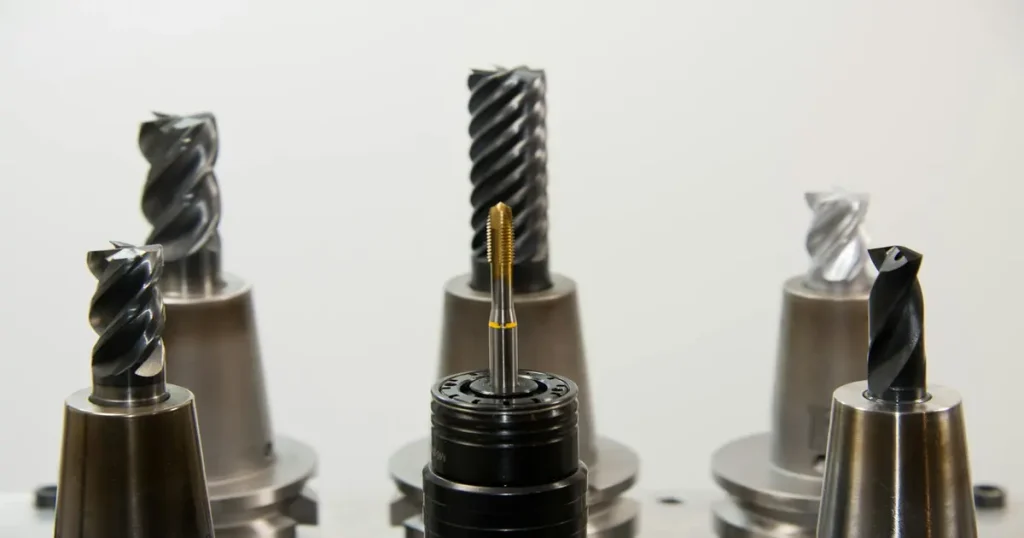
The Wrong Carbide Grade in a Slurry Pump Costs More Than the Part Itself
A copper mine in central Chile replaced the rubber-lined volute in their cyclone feed pump with a cemented carbide insert, expecting the upgrade from elastomer to tungsten carbide to deliver ten times the service life. Instead, the carbide throatbush fractured within 72 hours of startup. The failure wasn’t a quality issue. The grade they installed was formulated for high-hardness abrasion resistance (HRA 92+), but their slurry contained crushed ore fragments up to 15 mm in diameter. The material couldn’t absorb the particle impact.
That replacement cost four days of downtime, one flooded sump, and a $46,000 expedited freight order for a different-grade replacement. The pump OEM’s maintenance engineer later confirmed: the original recommendation had been based on a generic “hard metal for slurry” datasheet that never asked about particle size distribution.
Failure in slurry-handling carbide components is never random. It is the predictable result of a grade mismatch. And the mismatch always traces back to one decision: cobalt content versus particle size.

Why Slurry Pump and Hydrocyclone Environments Destroy the Wrong Carbide Grade
Slurry pumps and hydrocyclones create one of the most aggressive wear environments in mineral processing. High-velocity particle impact, continuous sliding abrasion, and corrosive carryover from flotation reagents or acidic process water degrade materials that survive perfectly well in dry crushing applications.
For the complete operating and material context, continue with the mineral processing carbide wear parts.
Three failure mechanisms operate simultaneously:
Erosive wear from fine particles. When the slurry contains particles below 100 mesh, the dominant wear mode is low-angle erosion. The abrasive grains scour the cobalt binder from the carbide surface, undercutting the WC grains until they dislodge. This mechanism accelerates as HRA drops — a difference of 2 HRA points can reduce service life by 30–50% in pure erosion conditions.
Impact spalling from coarse solids. Particles above 5 mm (crushed ore fragments, gravel, or recycled mill scats) strike the carbide surface at pump discharge velocities. If the grade lacks sufficient toughness (flexural strength below 2,000 MPa), surface spalling initiates at the impact point and propagates under subsequent hits.
Cavitation erosion near the impeller eye and cyclone inlet. Pressure differentials in pump volutes and hydrocyclone vortex finders create vapor bubbles that implode against the carbide surface. In cobalt contents above 12%, the binder erodes preferentially, creating a micro-porous surface layer.
The failure isn’t random. It’s the predictable result of selecting a grade optimized for one wear mode while the application demands a balance of all three.
The Technical Variables That Determine Grade Performance in Slurry Wear
Three interdependent variables govern how a cemented carbide grade performs in slurry pump and hydrocyclone components. Understanding their trade-offs is the difference between a part that lasts one season and one that outlasts the pump itself.
Hardness (HRA) — The Abrasion Ceiling
Hardness measured on the Rockwell A scale is the single best predictor of abrasion resistance in fine-particle slurry. Every 1-point increase in HRA reduces volume loss under pure sliding abrasion by roughly 12–15%, provided the wear mechanism stays erosive and does not transition to impact fracture.
Ruixin SR7X at HRA 91.0 ± 0.5 sits at the high-hardness end of the mining wear-part spectrum. This makes it the correct choice when the slurry particle size distribution is tightly controlled below 100 mesh and impact loads are negligible. Below HRA 88, the erosion rate in fine silica slurry accelerates sharply — the cobalt matrix erodes faster than the WC skeleton can support itself.
Cobalt Content — The Toughness Regulator
Cobalt content is the inverse variable to hardness. Increasing cobalt from 6% to 10% drops HRA by roughly 3 points but raises flexural strength from roughly 2,000 MPa to 2,200 MPa or higher. The relationship is monotonic: every 1% increase in cobalt content lifts impact resistance but surrenders abrasion resistance.
The selection threshold for slurry applications is 8% cobalt. Below this, the grade is optimized for pure abrasion resistance, suitable for hydrocyclone vortex finders handling classified fines. Above this, the grade shifts toward impact absorption, correct for pump volutes and throatbushes where tramp oversize particles are present.
Grain Size — The Most Overlooked Variable
Grain size (µm) is discussed less frequently than cobalt content or hardness but it may be the most influential parameter in fine-particle slurry erosion. At identical cobalt content, a 1.0 µm grain structure delivers higher abrasion resistance than a 3.0 µm structure, while a 2.0–3.0 µm grain provides the micro-toughness that prevents grain pullout under repeated particle impact.
Ruixin SR7X uses 1.0–1.2 µm grain size, a fine structure that produces a dense WC skeleton with minimal binder mean free path. This microstructure resists the microscale gouging action of fine quartz or silica particles. SR8C uses 2.0–3.0 µm grain, which concedes some abrasion resistance but prevents the grain-boundary fracture that occurs when a fine-grained grade encounters a coarse particle traveling at 15 m/s.
For slurry handling applications, grain size is the limiting constraint: grades finer than 1.0 µm lack the impact resistance for any solids above fine silt; grades coarser than 3.0 µm wear too fast in the recirculating fine fraction.

Grade Options and Performance Trade-offs for Slurry Wear Parts
Ruixin manufactures three cemented carbide grades suitable for slurry pump and hydrocyclone components. The selection between them depends on the particle size distribution, impact frequency, and chemical environment of the specific circuit.
Grade Selection Table
| Application Scenario | Recommended Grade | Key Parameters | Why This Grade |
|---|---|---|---|
| Fine-particle cyclone feed (particles < 100 mesh, pH 6–8, low impact) | SR7X | HRA 91.0 ± 0.5, 6% Co, 1.0–1.2 µm grain, ≥ 2,000 MPa flexural strength | The fine grain and low cobalt create maximum abrasion resistance against classified fines. Ideal for apex spigots and vortex finders in desliming cyclones. |
| Mill discharge / mixed particle slurry pumps (particles 100 mesh – 10 mm, intermittent coarse solids) | SR8C | HRA 89.0 ± 0.5, 8% Co, 2.0–3.0 µm grain, ≥ 2,200 MPa flexural strength | The 8% cobalt matrix absorbs impact from tramp oversize particles while the medium grain preserves acceptable erosion resistance. Standard for impellers and throatbushes in cyclone feed pumps. |
| Coarse tailings / gravel slurry (particles > 10 mm, high impact, heavy media circuits) | SR10C | HRA 88.0 ± 0.5, 10% Co, 2.0–3.0 µm grain, ≥ 2,200 MPa flexural strength | Highest impact resistance in the Ruixin wear-grade range. Specified for volute liners in pumps handling crushed ore slurry where SR8C shows spalling within one service interval. |
| Acidic process slurry (pH < 5, fine particles, corrosion + erosion) | SR7X + corrosion-resistant submicron formulation | HRA 91.0 ± 0.5, sub-1.0 µm grain, custom cobalt optimization | Extended binder corrosion resistance via reduced cobalt exposure area. Available as a custom grade formulation. Contact our engineers with your slurry chemistry details. |
The Trade-off in Plain Terms
The choice isn’t which grade is “better” — it’s which failure mode your application punishes more. If your pump component fails with a smooth, polished surface and reduced wall thickness, you lost the abrasion battle and should move to a higher-HRA grade. If it fails with chips, cracks, or spalled surfaces, you lost the impact battle and need higher cobalt content.
Ruixin SR8C at HRA 89.0 with 8% cobalt is the starting point for most mineral processing slurry pumps because it occupies the middle ground: sufficient abrasion resistance for the fines fraction, sufficient toughness for the occasional oversize particle. For dedicated fine-particle cyclones with controlled feed sizing, SR7X at HRA 91.0 delivers longer service intervals, typically 1.5× to 2× the life of a general-purpose grade under the same conditions.
Which Grade to Use — and Under What Conditions
The decision framework for selecting a carbide grade for slurry pump and hydrocyclone wear parts follows three conditional rules.
If the slurry is fully classified below 100 mesh with no oversize particles and the application is a hydrocyclone apex spigot, vortex finder, or pump throatbush in a closed grinding circuit — use SR7X at HRA 91.0. The fine grain (1.0–1.2 µm) and low cobalt (6%) maximize service life against the dominant erosion mechanism. Any grade with HRA below 90 will lose at least 25–35% of its potential service life in this environment.
If the slurry contains mixed particle sizes up to 10 mm (typical of cyclone feed pumps, mill discharge pumps, and primary cyclone clusters), use SR8C at HRA 89.0 with 8% cobalt and 2.0–3.0 µm grain. The flexural strength of ≥ 2,200 MPa provides the safety margin for intermittent coarse particle impact while the HRA 89.0 retains sufficient abrasion resistance for the fines fraction. This is the default selection for impeller and volute components in most mineral processing plants.
If the slurry contains gravel-sized solids above 10 mm, tramp oversize, or the pump handles cyclone underflow with coarse reject material — use SR10C at HRA 88.0 with 10% cobalt. The higher binder content raises flexural strength and prevents the impact fracture that would destroy SR7X or cause micro-spalling in SR8C within one service interval. The trade-off is faster wear in the fine fraction, but the component survives at all, which is the binding constraint when coarse solids are present.
For most mineral processing slurry pump setups, SR8C is the starting point. Here’s what to verify before ordering: confirm the maximum particle size in your feed stream, measure the pH of the carrier liquid, and document the current replacement interval of your existing wear parts. These three data points are sufficient for a grade match.
Ruixin SR8C is available as OEM-dimensioned impeller inserts, volute liners, throatbushes, and hydrocyclone apex spigots. See the full tungsten carbide wear parts range for available dimensions and delivery lead times.
How to Implement This in Your Operation
Once the correct grade is identified, successful implementation depends on three factors that fall outside the grade data sheet.
Dimensional Fit and Clearance
Carbide wear components in slurry pumps operate within tight clearances, particularly the impeller-to-throatbush gap and the volute liner seating surfaces. Ruixin manufactures all components per OEM drawings with dimensional tolerances held within ±0.1 mm on critical sealing surfaces. Send your pump make, model, and part drawing to confirm compatibility before production.
The application-level selection is covered in the Slurry Pump Carbide Wear Parts, including the inputs that change the recommendation.
Batch Consistency Across Service Intervals
Cemented carbide wear parts are often replaced on a rotating schedule across multiple pumps in the same plant. If the replacement batch differs in cobalt content by even 0.5% from the original, the wear rate changes and the scheduled replacement window shifts. Every Ruixin production batch ships with a material test report citing density, HRA, and flexural strength, so you can verify batch-to-batch consistency against the original qualification sample. This matters most for mining operations managing 8–12 pumps across a single circuit.
Custom Formulation for Non-Standard Conditions
If your slurry velocity exceeds 20 m/s, contains highly abrasive silica above 60% by mass, or operates at pH below 5 with continuous exposure, a catalog grade may not be the optimal solution. Ruixin offers custom grade formulation: cobalt content can be adjusted in 0.5% increments, grain size can be shifted within the 0.8–3.5 µm range, and corrosion-resistant binder modifications are available for acidic circuits. Standard SKU suppliers cannot match this capability.
For a deeper understanding of how carbide wear part selection affects total cost of ownership across a mineral processing plant, read our guide on carbide wear parts for mining equipment. It covers cost-per-ton calculations, replacement interval optimization, and comparative data across steel, white iron, and cemented carbide in common slurry handling applications.
If your conditions fall outside the parameters above (higher operating temperatures, unusual slurry chemistry, or non-standard OEM geometries), a custom grade formulation may be needed. Cemented carbide grade selection starts with understanding how cobalt and grain size interact under your specific wear conditions.

Frequently Asked Questions
How do I choose the right carbide grade for slurry pump wear parts?
Start by identifying the dominant particle size in your slurry. Fine particles below 100 mesh call for SR7X at HRA 91.0 and 1.0–1.2 µm grain size for maximum abrasion resistance. Mixed or coarse particles require SR8C at HRA 89.0 with 8% cobalt to absorb impact without fracturing. If the slurry contains gravel-sized solids above 10 mm, use SR10C at HRA 88.0 with 10% cobalt for maximum toughness.
What is the difference between SR7X and SR8C for hydrocyclone apex spigots?
SR7X delivers higher abrasion resistance at HRA 91.0 with a fine 1.0–1.2 µm grain structure, making it the better choice for fine-particle cyclone applications where pure sliding abrasion dominates. SR8C at HRA 89.0 with 2.0–3.0 µm grain and 8% cobalt provides better impact resistance, which matters in the apex spigot where coarse reject particles accelerate erosion at high velocity.
Which grade performs best under high-impact conditions in slurry handling?
Ruixin SR10C at HRA 88.0 with 10% cobalt and 2.0–3.0 µm grain size offers the highest flexural strength at ≥ 2,200 MPa, making it the best choice for high-impact conditions. It is specified for volute liners and throatbushes in slurry pumps handling coarse solids above 10 mm where repeated impact from large particles would fracture finer-grained grades.
How does cobalt content affect carbide performance in abrasive slurry environments?
Increasing cobalt from 6% to 10% reduces HRA from approximately 91 to 88 while raising flexural strength. In slurry pump applications, lower cobalt (6%) gives maximum abrasion resistance for fine-particle slurries. Higher cobalt (8–10%) provides the toughness needed to withstand impact from coarse solids. Ruixin SR7X uses 6% cobalt for pure wear resistance, while SR8C and SR10C use 8% and 10% respectively for impact resistance.
What causes premature carbide wear part failure in slurry pumps?
The most common cause is a mismatch between particle size and carbide grade. Using a high-toughness grade like SR10C in a fine-particle environment accelerates wear because the softer cobalt matrix erodes faster. Using a high-hardness grade like SR7X in coarse slurry causes chipping and fracture. Other causes include improper clearance in the impeller-volute gap, localized corrosion from acidic slurry with pH below 5, and batch-to-batch grade inconsistency from uncertified suppliers.
Is cemented carbide always better than white iron for slurry pump wear parts?
Not always. The breakeven depends on particle size and operating hours. In fine-particle slurries below 200 mesh, Ruixin SR7X typically outlasts white iron by 8:1 to 12:1 on volume loss. In coarse slurries with particles above 25 mm, a properly selected SR10C grade outperforms white iron by 4:1 to 6:1 because carbide does not rely on work hardening for its wear resistance — it performs consistently from installation to removal. Below roughly 2,000 operating hours per year, white iron may offer a lower cost-per-part, but the higher replacement frequency and downtime costs usually favor cemented carbide on total cost of ownership.
What documentation should I request from a carbide wear parts supplier?
Request a material test report for every production batch showing density (g/cm³), hardness (HRA), and flexural strength (MPa) — the three parameters that determine wear performance. Ruixin provides this documentation with every shipment. Also request grain size certification (µm) and cobalt content verification. If a supplier cannot provide batch-specific QC data, you cannot verify that the installed grade matches what you specified.
Get a Custom Grade Recommendation
Send us your pump model, slurry particle size distribution, pH level, and current replacement interval. Our engineers will confirm the optimal Ruixin grade (SR7X, SR8C, or SR10C) and provide dimensional compatibility within 24 hours. Custom grade formulations are available for non-standard slurry chemistry or operating conditions.
Email: info@ruixintungstencarbide.com
WhatsApp: +86-15253178777
ISO 9001:2015 certified | Drawings accepted for OEM dimensions | Batch material test reports included with every shipment
 English
  Russian
  Spanish
  French