
Equipment
- Forestry mulchers and stump grinders
- Wood shredders and chippers
- Waste, glass and biomass crushers
- Recycling hammers and cutting rotors

MULCHERS, SHREDDERS, GRINDERS & RECYCLING EQUIPMENT
Keep cutting geometry stable through mixed and contaminated feed by balancing carbide toughness, edge design and body support.
APPLICATION FIT
WORKING CONDITIONS
A useful recommendation starts with the load, environment and mating system. Include measured data when available and describe field conditions when it is not.
COMMON FAILURE MODES
COMPLETE TOOL + CARBIDE
Capability note: complete assemblies are evaluated against the drawing, sample, production volume and available technical evidence. No field-life claim is made until a controlled trial is completed.
VERIFIED COMMERCIAL EVIDENCE
Ruixin currently publishes real studio photographs of carbide strips and special geometries. They establish relevant manufacturing inputs but do not represent a finished mulcher, grinder, shredder or customer rotor assembly.
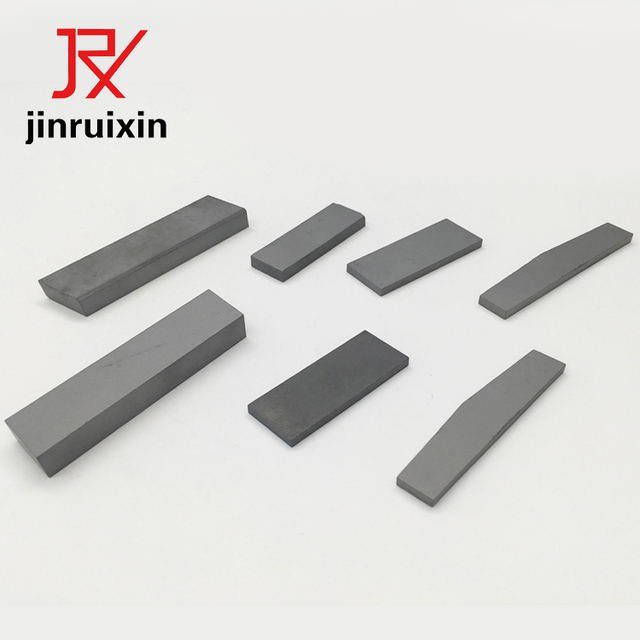
Ruixin studio product photograph. Relevant to supported wear strips and inserts; attachment and edge design require an approved tool drawing.
Open source product →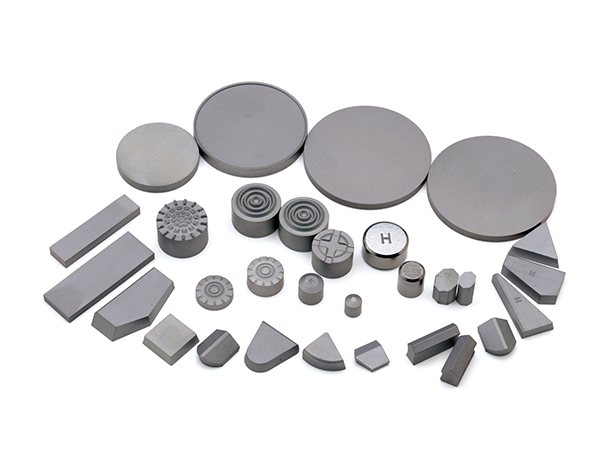
Ruixin studio product photograph of custom carbide forms. Representative shape capability only; not a forestry or recycling customer assembly.
Open source product →Width 2–60 mm, thickness 1–20 mm and length up to 330 mm standard, with custom dimensions reviewed from a drawing.
View dimensions →Sintered or ground and lapped strip supply is listed, with standard flatness of ±0.05 mm.
View tolerance scope →SR7X, SR8C and SR10C published data provides starting points for clean abrasive feed, mixed impact and contaminated-feed trials.
View grade data →Published strip samples are 1–10 pieces and listed at 3–5 business days; bulk strips are listed at 2–4 weeks. Custom geometries and formulations are quoted separately.
View sample terms →Evidence still required: real mulcher, stump-grinder, shredder or recycling-tool photographs; carbide-to-steel joining details; a redacted inspection report; and an anonymous case with feed contamination, rotor conditions and measured wear results.
Submit approved evidence or project detailsRECOMMENDED PRODUCT FAMILIES
These families are starting points. Final grade, size, tolerance and assembly scope are confirmed from working conditions.
CUSTOM DEVELOPMENT
Drawing or sample review
Working-condition and failure analysis
Grade, geometry and joining proposal
Sample manufacture and inspection
Field test, feedback and batch release
Carbide system, grain size and binder are selected against the application requirement.
Critical dimensions, interfaces and inspection scope are confirmed before sampling.
Trial quantities and field feedback establish evidence before scale-up.
Inspection and material documents are agreed according to project scope.
TECHNICAL LIBRARY
Use these supporting articles for selection, failure diagnosis, operating review and purchasing preparation.
FAQ
Metal, stone, glass and mineral contamination increase impact variability. A tougher grade, stronger edge support or different carbide placement may be needed even when clean feed is highly abrasive.
A drawing or physical sample can be reviewed for geometry, carbide, steel body and joining method. Feasibility and critical tolerances are confirmed before sampling.
Products and images demonstrate relevant carbide and custom-manufacturing capabilities. Forestry and recycling assemblies are quoted only after the specific drawing, sample and operating conditions are approved.
ENGINEERING SUPPORT
Share the equipment, material, current part and wear pattern so the recommendation starts with the real working condition.
ENGINEERING INQUIRY
Leave your contact details and a short requirement. Engineering will follow up for drawings and working conditions when needed.


 English
  Russian
  Spanish
  French