
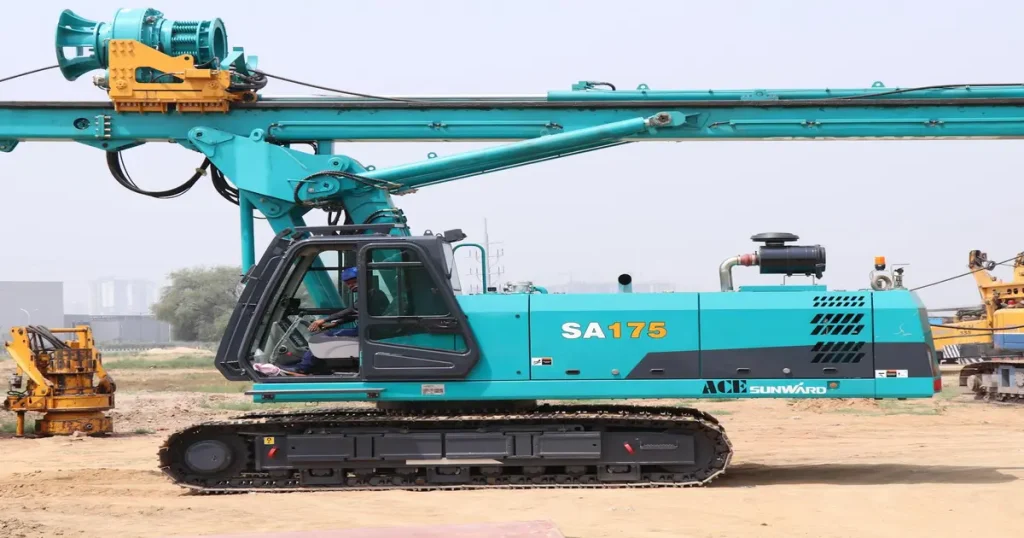
Foundation Drilling Carbide Cutter Bits: Why the Wrong Grade Costs More Than the Bit
Foundation drilling carbide cutter bits face a unique challenge: each borehole can pass through three or more distinct ground conditions. A piling contractor working mixed overburden — 8 meters of sandy clay, then 4 meters of weathered sandstone with chert nodules, then competent limestone — ran a single carbide grade across all three zones. The cutter bits on the Bauer rotary rig lasted 60 hours in the clay, 28 hours in the sandstone, and failed by chipping within 12 hours of hitting the limestone. The replacement cost wasn’t the inserts: it was the 19 hours of unplanned downtime across two rigs, the crane standby, and the concrete pour that had to be rescheduled.
For the complete operating and material context, continue with the Carbide Grade Selection for Foundation Drilling.
The failure wasn’t bad carbide. It was the wrong grade-to-ground match.
Foundation drilling carbide cutter bits face a wider range of ground conditions than almost any other drilling application. The same rotary rig that bores through soft clay in the morning can hit decomposed granite with quartz inclusions by lunch. The ground condition variable is the single factor that determines whether a carbide grade delivers economical service life or fails in the first shift.
The right match — HRA, cobalt content, and grain size aligned to the actual ground — is what determines whether the cutter bits last the shift or fail before the concrete is poured.

Why Variable Ground Conditions Destroy the Wrong Carbide Grade in Rotary Drilling
Rotary bored pile drilling creates three distinct failure mechanisms depending on ground type — and each mechanism punishes a different carbide spec mismatch.
Soil and sand (low abrasion, low impact): The primary wear mode is erosion of the cobalt binder by fine particles. A grade with cobalt content below 8% wears prematurely here because the binder matrix is too lean to resist particle washout. The symptom is a rounded, polished cutting edge that stops penetrating.
Weathered rock with hard inclusions (moderate abrasion, intermittent impact): This is the most punishing condition for grade selection. A carbide cutter bit faces short bursts of high stress when the tooth hits a chert nodule or quartz vein, then moderate abrasion through the matrix. A high-hardness grade (HRA 91+) chips under the impact spike. A high-toughness grade (HRA 88 or below) wears too fast through the abrasive matrix. The failure mode alternates between micro-chipping and accelerated flank wear.
Hard rock (high abrasion, low to moderate impact): The dominant failure mode is abrasion wear on the carbide flank. Cobalt is eroded by hard quartz or feldspar particles, and the WC grains eventually become unsupported and pull out. The failure signature is a smooth, worn bevel at the cutting edge. Here, higher HRA and finer grain size extend service life, but only if the rock is homogeneous — any hard inclusion in an otherwise competent rock mass flips the failure mode to fracture.
The failure isn’t random. It’s the predictable result of a grade variable mismatch: cobalt content, HRA, and grain size each control a specific failure mode, and the ground condition determines which mode dominates.
The Technical Variables That Determine Grade Performance in Rotary Drilling
Three interdependent variables control how a cemented carbide cutter bit performs in rotary bored pile drilling.
Hardness (HRA) — The Abrasion Ceiling
HRA is the primary indicator of abrasion resistance in foundation drilling carbide cutter bits. Ruixin SR7X at HRA 91.0 resists abrasive wear approximately 30% longer than a grade at HRA 89.0 in homogeneous hard rock, based on field data from limestone and sandstone drilling. But HRA alone is misleading: if the rock includes impact events, a harder grade chips faster than a softer one.
The practical threshold: at or above HRA 90.5, carbide becomes increasingly susceptible to fracture under point impact loads. Below HRA 88.5, the material becomes soft enough that abrasion wear accelerates exponentially in high-silica-content rock.
Cobalt Content (%) — The Toughness Reservoir
Cobalt acts as the ductile binder that absorbs impact energy. The relationship is inverse to hardness: increasing cobalt from 6% to 10% drops HRA by approximately 3 points, but increases flexural strength from 2,000 MPa to 2,200 MPa and above.
- 6% cobalt (SR7X): Maximum wear resistance, lowest impact tolerance. Best for homogeneous hard rock with no impact events.
- 8% cobalt (SR8C): Balanced wear and impact. The middle ground for mixed ground conditions.
- 10% cobalt (SR10C): Maximum impact absorption, lower abrasion resistance. For broken ground, boulders, and high-impact formations.
Grain Size (µm) — The Edge Stability Factor
Fine grain size (1.0–1.2 µm) produces a denser carbide structure that resists fine-particle abrasion — ideal for homogeneous rock. Coarser grain (2.0–3.0 µm) provides greater crack propagation resistance at the expense of some surface hardness.
Ruixin SR7X at 1.0–1.2 µm grain size is optimized for wear resistance in non-impacting rock. SR8C and SR10C at 2.0–3.0 µm grain size are designed to stop micro-cracks from growing into macro-fractures under impact loading.
The interaction is straightforward: fine grains + low cobalt = high wear resistance, low toughness. Coarse grains + high cobalt = high toughness, lower wear resistance. The ground condition determines which end of the spectrum is correct.
For rotary bored pile drilling, cobalt content is the limiting constraint — which means starting the grade selection with the question: “What is the highest-impact condition this bit will encounter in a single pile?”
Grade Options and Performance Trade-offs for Foundation Drilling
Ruixin manufactures three cemented carbide grades that cover the full range of ground conditions in rotary bored pile drilling. The table below maps each grade to specific application scenarios.
Application Scenario — Grade Selection Table
| Application Scenario | Recommended Grade | Specifications | Why This Grade |
|---|---|---|---|
| Soft soil, sand, clay — low abrasion, occasional gravel or cobbles | SR10C | HRA 88.0, 10% Co, 2.0–3.0 µm, ≥ 2,200 MPa | Highest toughness absorbs cobble impacts without chipping; lower HRA is acceptable because soil abrasion is minimal. Cost per meter is lowest in this scenario. |
| Weathered rock, sandstone with hard inclusions, mixed overburden with chert/quartz nodules | SR8C | HRA 89.0, 8% Co, 2.0–3.0 µm, ≥ 2,200 MPa | 8% cobalt provides impact resistance for intermittent hard inclusions; HRA 89.0 maintains adequate wear resistance through the abrasive rock matrix. The most versatile grade for mixed ground. |
| Homogeneous hard rock (limestone, granite, basalt) — low impact frequency, high abrasion | SR7X | HRA 91.0, 6% Co, 1.0–1.2 µm, ≥ 2,000 MPa | Maximum hardness and fine grain size resist abrasive wear in competent rock. Do not use where impact events exceed 5–8 per meter. |
| Broken rock, bouldery ground, highly fractured formations — high impact, moderate abrasion | SR10C | HRA 88.0, 10% Co, 2.0–3.0 µm, ≥ 2,220 MPa | Maximum cobalt content and coarse grain provide the crack-stopping toughness needed when every rotation hits an irregular face. Wear rate is higher, but the alternative is insert fracture in the first meter. |
The choice isn’t “which grade is better” — it’s which failure mode your ground condition punishes more: abrasion or fracture. If the formation alternates within a single pile depth, the conservative choice is the tougher grade at the cost of some wear life.

Consequences of Selecting the Wrong Grade
Using the wrong carbide grade in rotary bored pile drilling produces measurable operational penalties:
-
Tip life drops by 30–50% when a high-toughness grade (SR10C) is used in abrasive hard rock. The softer binder erodes faster than the WC grains can be supported, and the cutting edge rounds off. Penetration rate drops, forcing more regrinds or earlier replacement.
-
Insert fracture rate increases 4–6× when a high-hardness grade (SR7X) is used in weathered rock with hard inclusions. The fine grain and low cobalt content cannot absorb the impact energy. The fracture is sudden — not gradual wear — meaning unscheduled downtime on the rig.
-
Replacement frequency doubles when the grade is wrong. A correctly selected SR8C in weathered sandstone with chert might deliver 40–50 hours. A misapplied SR7X in the same condition fails by chipping within 15–20 hours. Over a 20-pile project, that difference adds up to 2–3 full bit changes per rig.
-
Cost per meter rises 20–35% when factoring in the replacement inserts, the crane time, and the labor to swap cutter bits on the rig. The cost of the carbide itself is a fraction of the total cost of the failure.
The operational takeaway: grade selection is not a metallurgical preference — it is a cost-control decision with direct impact on project margin.
Which Grade to Use — and Under What Conditions
The following decision framework applies to any rotary bored pile application.
If the ground is predominantly soil, sand, or soft clay with occasional gravel or cobbles, use Ruixin SR10C at HRA 88.0 and 10% cobalt. The high cobalt content absorbs cobble impacts without fracture. Abrasion wear is low in this ground type, so the lower HRA is not a penalty.
If the ground is weathered rock, sandstone, or mixed overburden with hard inclusions (chert, quartz veins, limestone nodules), use Ruixin SR8C at HRA 89.0 and 8% cobalt. This is the most versatile foundation drilling carbide cutter bits grade for mixed conditions. The 2.0–3.0 µm grain size stops micro-cracks from propagating, and 8% cobalt provides a meaningful toughness reserve without sacrificing wear resistance entirely.

If the ground is homogeneous hard rock (granite, basalt, competent limestone, dolomite) with minimal fracturing or boulders, use Ruixin SR7X at HRA 91.0 and 6% cobalt. The 1.0–1.2 µm grain size and fine-grain structure deliver the highest abrasion ceiling available in cemented carbide for this application class. Do not use SR7X where the rock includes broken zones or boulders — the fracture risk is unacceptable.
If the ground is highly fractured rock, bouldery till, or rip-rap fill, use Ruixin SR10C at HRA 88.0 and 10% cobalt. Accept the shorter wear life in exchange for surviving the impact cycle. The alternative — replacing fractured SR7X or SR8C inserts mid-pile — costs more than the accelerated wear of SR10C.
For most rotary bored pile setups, SR8C is the starting point — confirm with your rig’s rotation speed, crowd pressure, and the maximum rock hardness (Mohs or unconfined compressive strength) expected in the pile depth.
See the full SR8C carbide cutter bits for rotary drilling product page for available dimensions and lead times.
How to Implement This in Your Operation
Once the grade is selected, three practical factors determine whether the bits perform to specification.
Brazing quality: Carbide cutter bits are brazed into a steel bit body. The brazing temperature must stay below 650°C to avoid cobalt migration from the binder, which creates a cobalt-depleted zone at the carbide surface. This zone is brittle and initiates cracks. Ruixin recommends low-temperature brazing alloys and controlled heating.
Inventory management by zone: For projects with varying ground conditions across the site, stock two grades — SR8C for the weathered overburden and SR7X or SR10C for the rock zone. Change cutter bits when the rig reaches the formation change depth, not after failure.
Batch consistency: Ruixin’s production process — up to 500 tons annual capacity across a 14,200 m² ISO-certified facility — ensures that HRA values stay within ±0.5 and grain size distribution is consistent from batch to batch. This matters for contractors running multiple rigs who need identical performance across all cutter bits. For related applications such as DTH drilling in hard rock, our spherical carbide buttons follow the same grade selection principles.
For a deeper understanding of how cobalt content and grain size interact across all cemented carbide applications, read our complete guide to cemented carbide grade selection.
If your conditions fall outside these parameters — non-standard bit geometry, extreme ground conditions, or a need for custom grade formulation — Ruixin offers OEM development from drawings with 24-hour quotation turnaround.
Frequently Asked Questions
How do I choose the right carbide grade for foundation drilling in variable ground conditions?
Match the grade to the ground condition. For soft soil and sand, Ruixin SR10C at HRA 88.0 with 10% cobalt handles impact from cobbles. For weathered rock with mixed inclusions, Ruixin SR8C at HRA 89.0 and 8% cobalt provides balanced wear and impact resistance. For hard rock with low impact frequency, Ruixin SR7X at HRA 91.0 with 6% cobalt delivers maximum abrasion resistance. Send your rig model and ground conditions to Ruixin engineers for a confirmed recommendation.
What is the difference between SR7X and SR8C for rotary drilling bits?
SR7X has a hardness of HRA 91.0 with 6% cobalt and 1.0–1.2 µm grain size, optimized for high abrasion resistance in hard, non-impacting rock. SR8C has HRA 89.0 with 8% cobalt and 2.0–3.0 µm grain size, designed for balanced wear resistance and impact toughness in mixed ground conditions. SR7X wears longer in homogeneous hard rock but chips under impact. SR8C survives the impact cycles of weathered rock with boulders.
Which Ruixin carbide grade performs best under high-impact conditions in hard rock?
Ruixin SR10C at HRA 88.0 with 10% cobalt and 2.0–3.0 µm grain size is the best choice for high-impact hard rock conditions. Its higher cobalt content provides the flexural strength needed to absorb shock loads from boulders and broken formations. SR10C delivers flexural strength of at least 2,200 MPa, making it suitable for foundation drilling where impact frequency is high but some abrasion resistance can be traded for toughness.
How does cobalt content affect carbide cutter bit performance in weathered rock?
Cobalt content determines the toughness-to-hardness balance. At 6% cobalt (SR7X), the bit is very hard but brittle — it resists abrasion well but fractures under impact. At 8% cobalt (SR8C), the bit absorbs moderate impact while maintaining good wear resistance — ideal for weathered rock where hard inclusions appear intermittently. At 10% cobalt (SR10C), toughness is maximized for high-impact conditions but the wear rate increases from cobalt washout by fine particles. For weathered rock with hard boulders, Ruixin SR8C at 8% cobalt is typically the best starting point.
What causes premature carbide cutter bit failure in rotary bored pile drilling?
Premature failure is most often caused by a grade mismatch with the ground condition. Using a high-hardness grade like Ruixin SR7X in ground with boulders or broken rock leads to chipping and fracture. Using a high-toughness grade like Ruixin SR10C in abrasive sand or hard clay accelerates wear and reduces bit life by 30–50%. Other causes include incorrect brazing (temperatures above 650°C), excessive rotation speed generating heat above 600°C that accelerates cobalt washout, and a worn bit body that no longer supports the carbide properly.
Can I use the same carbide grade for the entire depth of a bored pile through multiple formations?
Yes, but it requires a conservative choice. If ground conditions vary significantly within a single pile (e.g., soil to weathered rock to hard rock), the safest option is Ruixin SR8C at HRA 89.0 with 8% cobalt. It provides enough impact resistance for the weathered zone and enough wear resistance for the hard rock, though it won’t be optimal for either. For maximum performance, Ruixin offers multi-grade cutter bit arrangements where harder grades are placed on the gauge row and tougher grades on the center.
What is the lead time for custom carbide cutter bits from Ruixin?
Ruixin confirms grade selection and available dimensions within 24 hours of receiving application details — rig model, rock type, bit drawing, and current grade. Sample orders are produced next, followed by volume supply. With up to 500 tons annual capacity, Ruixin handles both prototype quantities and production volumes.
Get a Custom Grade Recommendation
Every foundation drilling project has unique ground conditions. Send us your application details — rig model (Bauer, Liebherr, Soilmec, or equivalent), rock type and hardness, bit dimensions or drawings, and the current grade you are using. Our engineers will confirm the optimal grade match and available dimensions within 24 hours.
Email: info@ruixintungstencarbide.com
WhatsApp: +86-15253178777
 English
  Russian
  Spanish
  French